Memory boom drives record earnings even as soaring chip costs squeeze smartphones, appliances
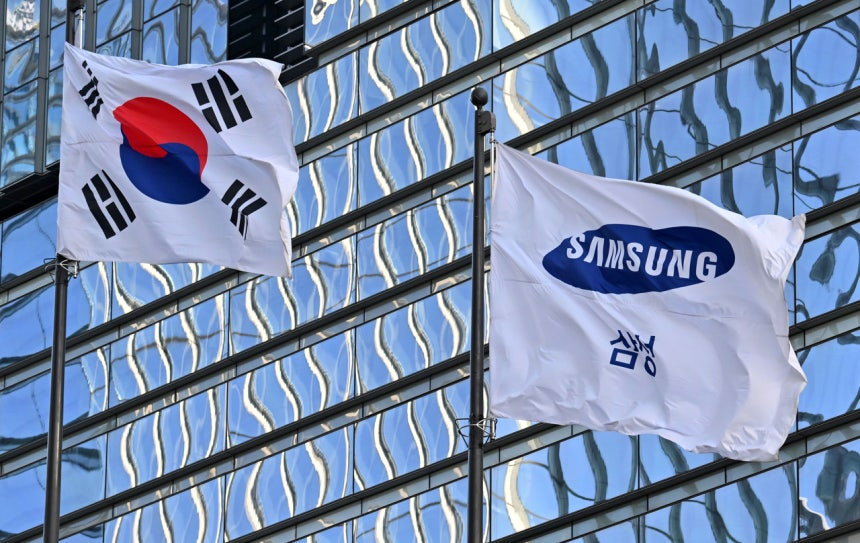
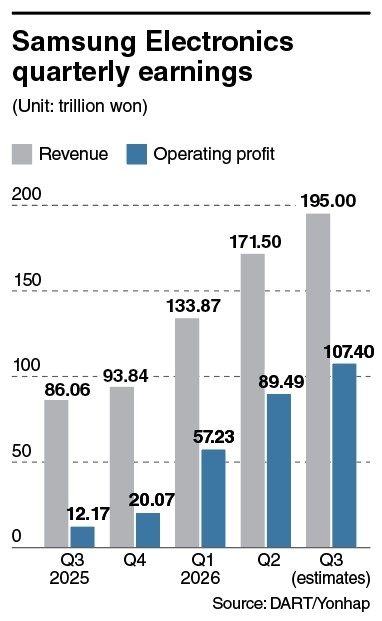
Samsung Electronics said Thursday its third-quarter operating profit surged an estimated 782.5 percent from a year earlier to a record 107.4 trillion won ($80 billion), making it the first technology company worldwide to cross the 100 trillion won mark in quarterly operating profit.
The milestone puts Samsung alongside Saudi oil giant Aramco, the only other company to have surpassed that threshold, and well above Nvidia’s $63.7 billion operating profit for its fiscal second quarter ended in July.
Samsung has now posted four consecutive quarterly profit records. Revenue also hit a record 195 trillion won, up 126.6 percent on-year, according to preliminary earnings guidance.
Samsung shares closed down 1.86 percent at 263,500 won despite the record earnings guidance. The benchmark Kospi fell 2.62 percent to 6,625.93.
Samsung did not provide divisional results, but analysts estimate its memory business generated about 110 trillion won in operating profit, more than offsetting losses in smartphones, consumer electronics and foundry operations.
The earnings surge was driven by booming demand for high-bandwidth memory used in AI computing and sharply higher prices for conventional memory chips. Securities industry estimates put third-quarter DRAM and NAND price increases at 15 percent and 18 percent, respectively, amid tight supply.
But soaring memory prices have become a double-edged sword for Samsung.
The same component cost increases powering its semiconductor profits are squeezing margins at its smartphone, TV and appliance businesses. Analysts estimate the mobile division lost about 1.5 trillion won, following a 700 billion won loss in the second quarter. TVs and home appliances are projected to have posted combined losses of 700 billion to 800 billion won.
A stronger won also weighed on earnings by reducing the value of dollar-denominated chip sales when converted into Korean currency. Some forecasts had put quarterly operating profit above 120 trillion won before the won’s appreciation prompted analysts to lower their estimates.
Samsung Display is estimated to have contributed around 1 trillion won in operating profit, while audio and automotive electronics subsidiary Harman likely added about 400 billion won.
The memory boom is expected to extend into next year. Tight HBM supply continues to support prices, while chipmakers’ push to allocate more capacity to HBM is constraining conventional DRAM supply.
Meritz Securities recently raised its forecast for Samsung’s 2027 operating profit to 632 trillion won from 562 trillion won.
Samsung is expanding HBM production lines in Pyeongtaek to capture rising AI demand while pursuing longer-term production sites in Yongin and Gwangju. It is also expanding advanced foundry capacity in Texas to strengthen its contract chipmaking business.
Record semiconductor earnings are also translating into bigger employee rewards. Samsung has finalized a special bonus plan for its chip division funded by 10.5 percent of the unit’s previous-year operating profit, with no cap.
After tax, the bonuses will be paid entirely in Samsung shares between late March and early April next year, subject to shareholder approval. Forty percent of the pool will be distributed across the semiconductor workforce, with the remaining 60 percent allocated based on individual business units’ performance.
Samsung will release detailed third-quarter results later this month.
herim@heraldcorp.com

![[Survive&Thrive] Tips for getting around Seoul by subway (2)](https://wimg.heraldcorp.com/news/cms/2026/10/08/news-p.v1.20261006.1e7dee51d7f64cdba1a20b897d88cee6_T1.jpg?type=h&h=800)